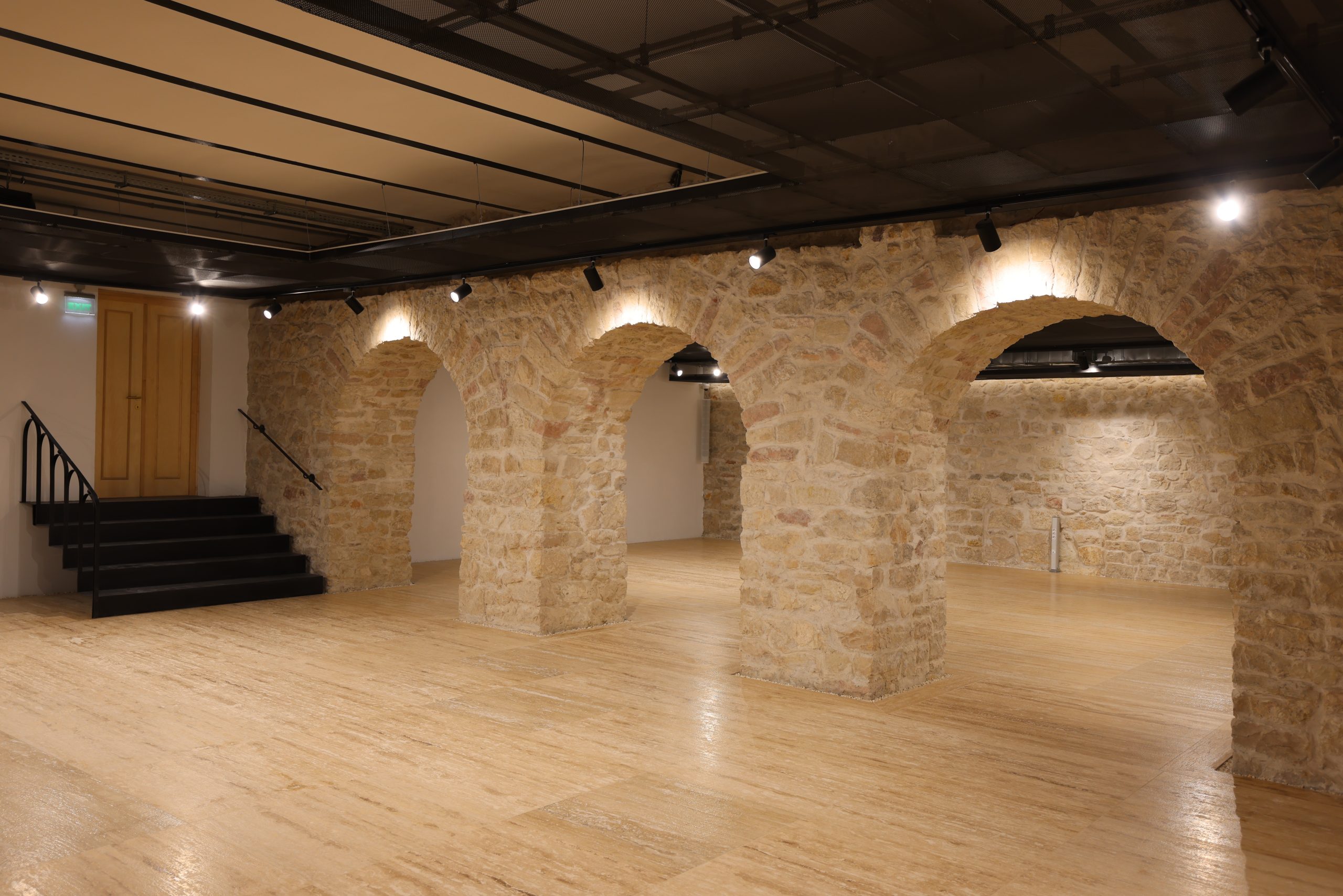
A local intervention only makes sense if you understand the surrounding force flow, not only the detail that appears problematic.
A cantilever should never be read by isolating the free end from the rest of the structure. On site there is often a temptation to treat the visible detail as an autonomous problem, yet the real behaviour depends on continuity, supports, old cracks, and the way the element has been loaded over time.
The visible detail is not the whole structure
At the Casino, the areas projecting in cantilever could not be assessed only through the visible finish or a frontal photograph. The degradation along the edges told only part of the story. To validate the intervention, we had to understand the relationship between the existing reinforcement, the main beams, and the deformations accumulated over time.
Validation starts with the right hypotheses
Before proposing a new detail, you have to formulate working hypotheses that can be checked: which part of the section is still active, where material has been lost, what the likely force path is, and what role the stiffness of the overall system plays. Without this sequence, the solution risks becoming only an elegantly drawn improvisation.
The intervention must remain proportional
In work on existing structures, a correct intervention is not necessarily the most visible one, but the one that brings the element back into a safe working regime without forcing the rest of the system.